Turtlegrass Model for Marine Music, Memory, and Immersion
Aquatic plant model for the Marine Music, Memory, and Immersion project at the VESL Lab, University of Miami. This model represents turtlegrass, a key species in marine ecosystems, created for educational and research purposes.
- Timeline
- Feb – Apr 2025
- Category
- 3D asset · Research
- Tools
- Blender, Substance 3D Painter, Nomad Sculpt
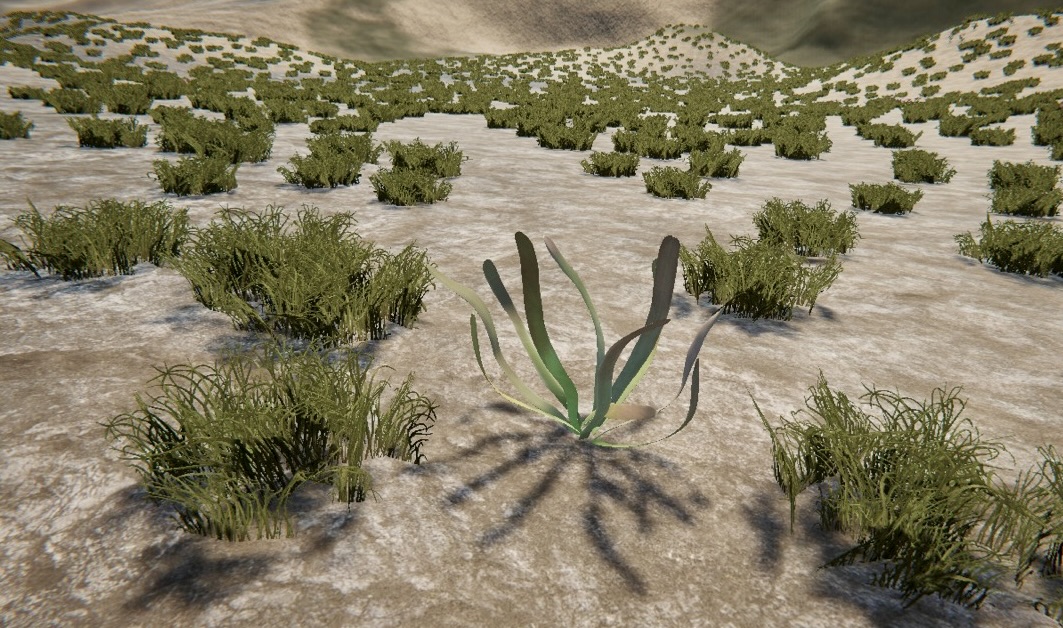
A meticulously crafted 3D model of turtlegrass, an essential marine plant that provides habitat for countless species in coastal ecosystems. Created using Nomad Sculpt for the initial form, refined in Blender, and textured with Substance 3D Painter to achieve photorealistic detail.
Acknowledgements
This asset was developed for the VESL Lab at the School of Communications, University of Miami. All rights to this model are retained by the lab and its creators. The model is intended for educational and research purposes only.
View Project on VESL Lab Website
The project examines the impact of pairing musical elements with marine specimens' infographics in a VR experience, aimed at enhancing middle school students' immersion, recall, and comprehension in marine education. Using statistical analysis and memory principles, it evaluates how music can reinforce the retention and understanding of marine science information.
Project Overview
- Reference Images
- Initial Sculpting in Nomad Sculpt
- Refinement in Blender
- Texturing with Substance 3D Painter
- Unity Integration
- Optimized for Real-Time Rendering
Reference Images
Thalassia testudinum is a seagrass species commonly known as turtlegrass, found in the shallow waters of the Caribbean and Gulf of Mexico. For this project, reference images were gathered from various marine biology resources, including underwater photography and scientific illustrations, to ensure anatomical accuracy and realistic texturing.
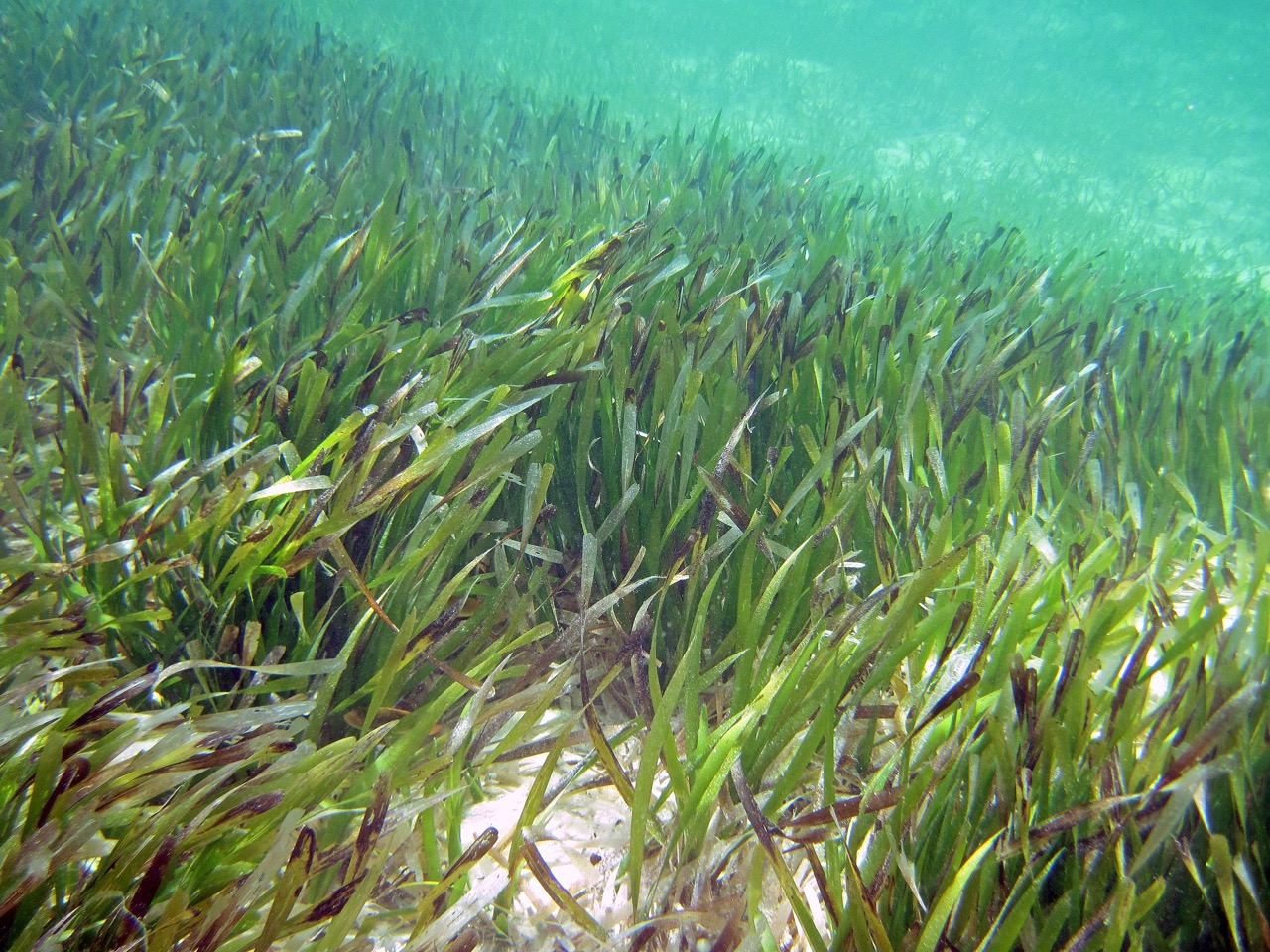
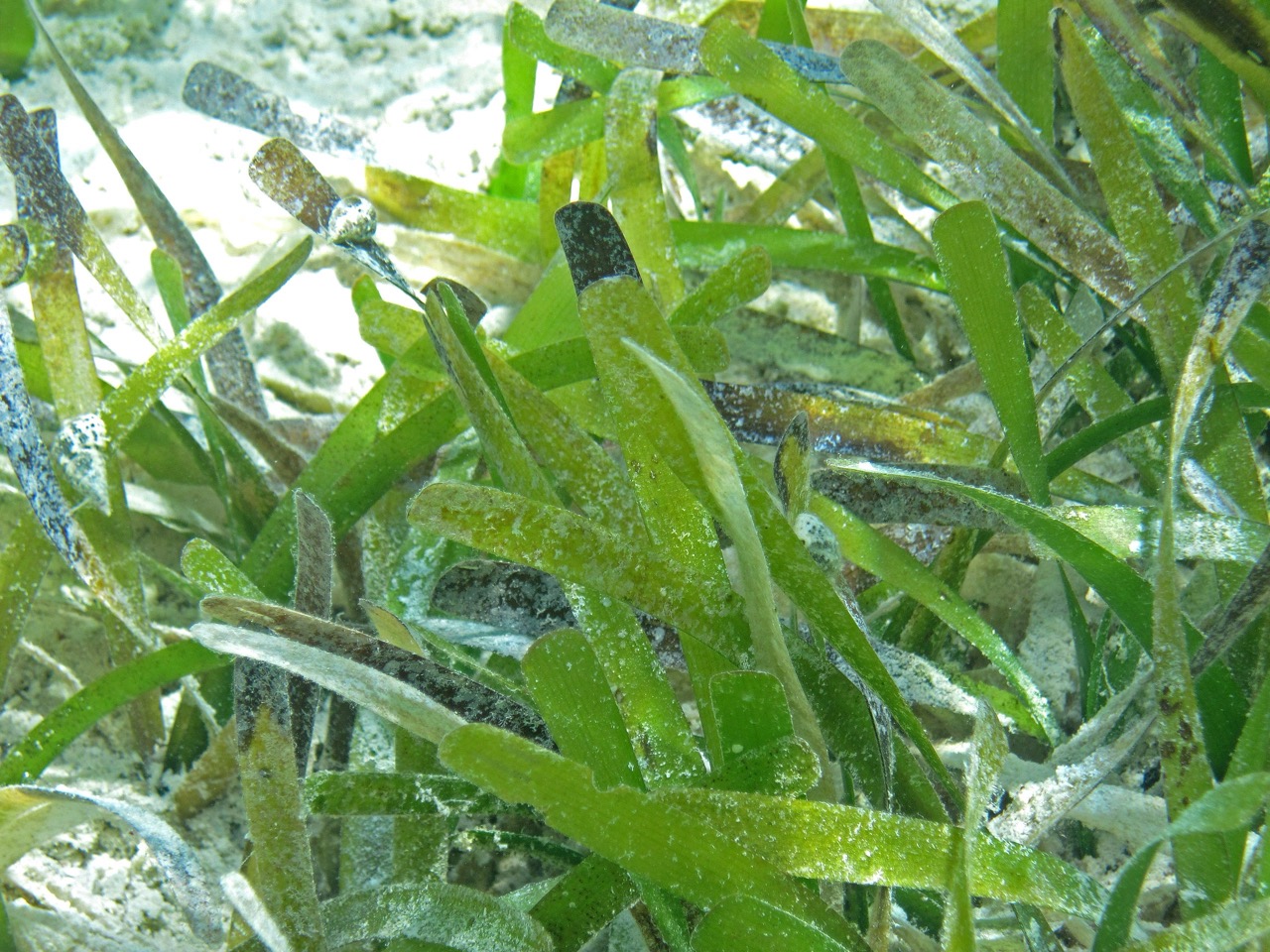
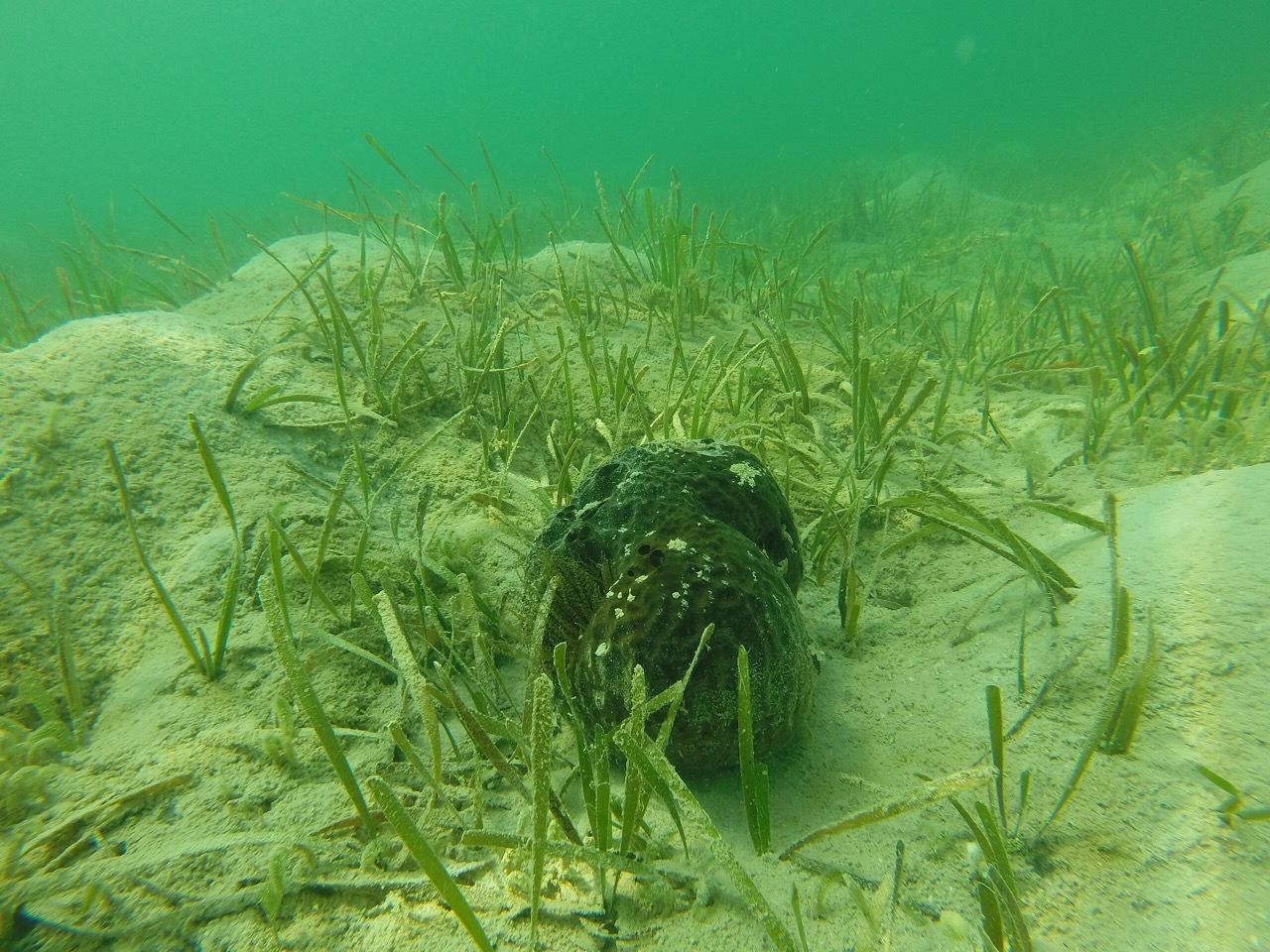
These reference images were crucial in understanding the morphology and color variations of turtlegrass, which informed the sculpting and texturing process. The images provided insights into the plant's structure, including leaf shape, growth patterns, and coloration, ensuring that the final model accurately represents this important marine species.
Initial Sculpting in Nomad Sculpt
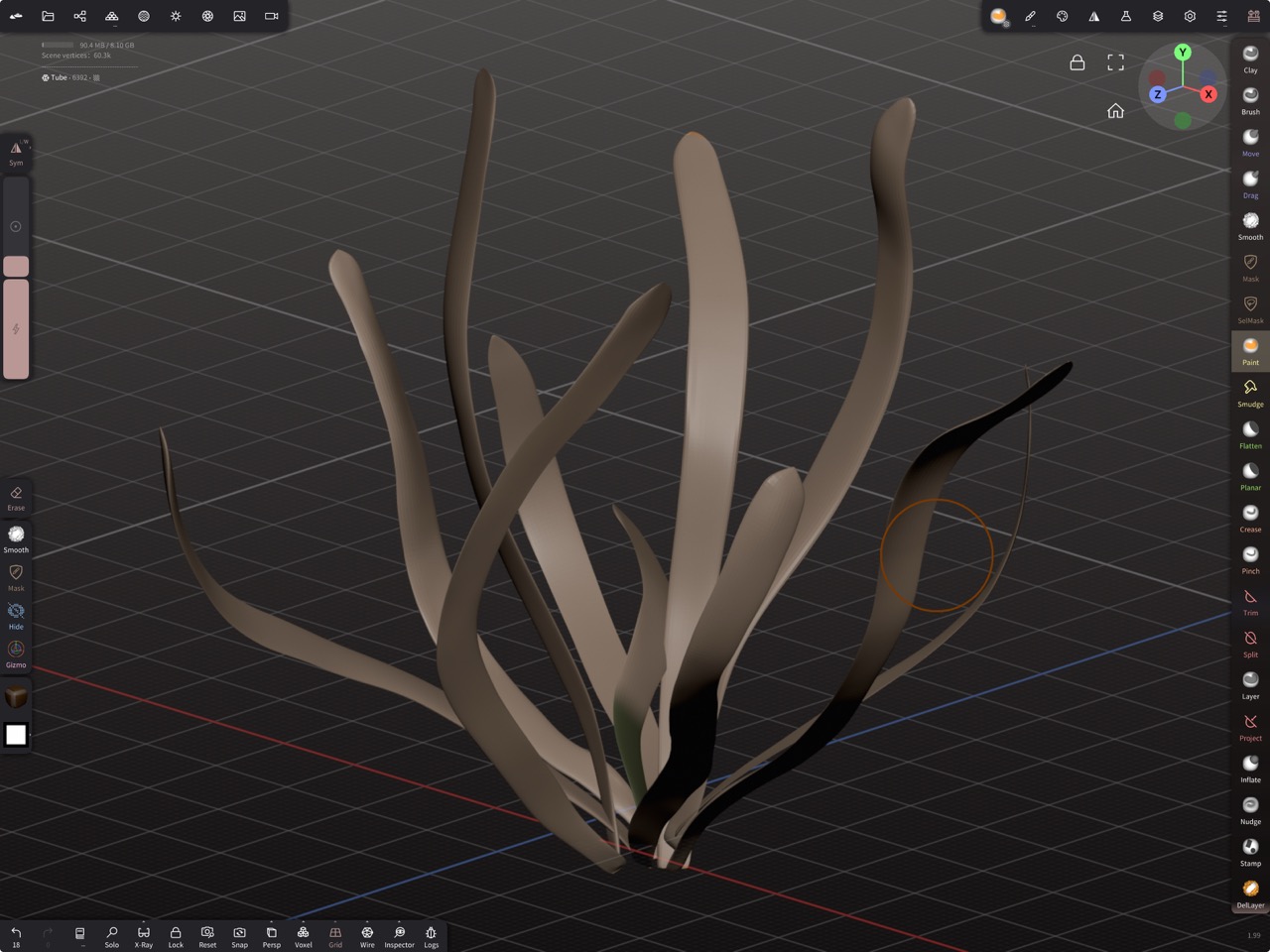
The initial sculpting of the turtlegrass model was done using Nomad Sculpt, a powerful mobile sculpting app. This stage focused on blocking out the basic shape and form of the turtlegrass blades, capturing the organic flow and curvature typical of this species. The sculpting process involved using various brushes to create the intricate details of the leaves, ensuring a natural and realistic appearance.
Refinement in Blender
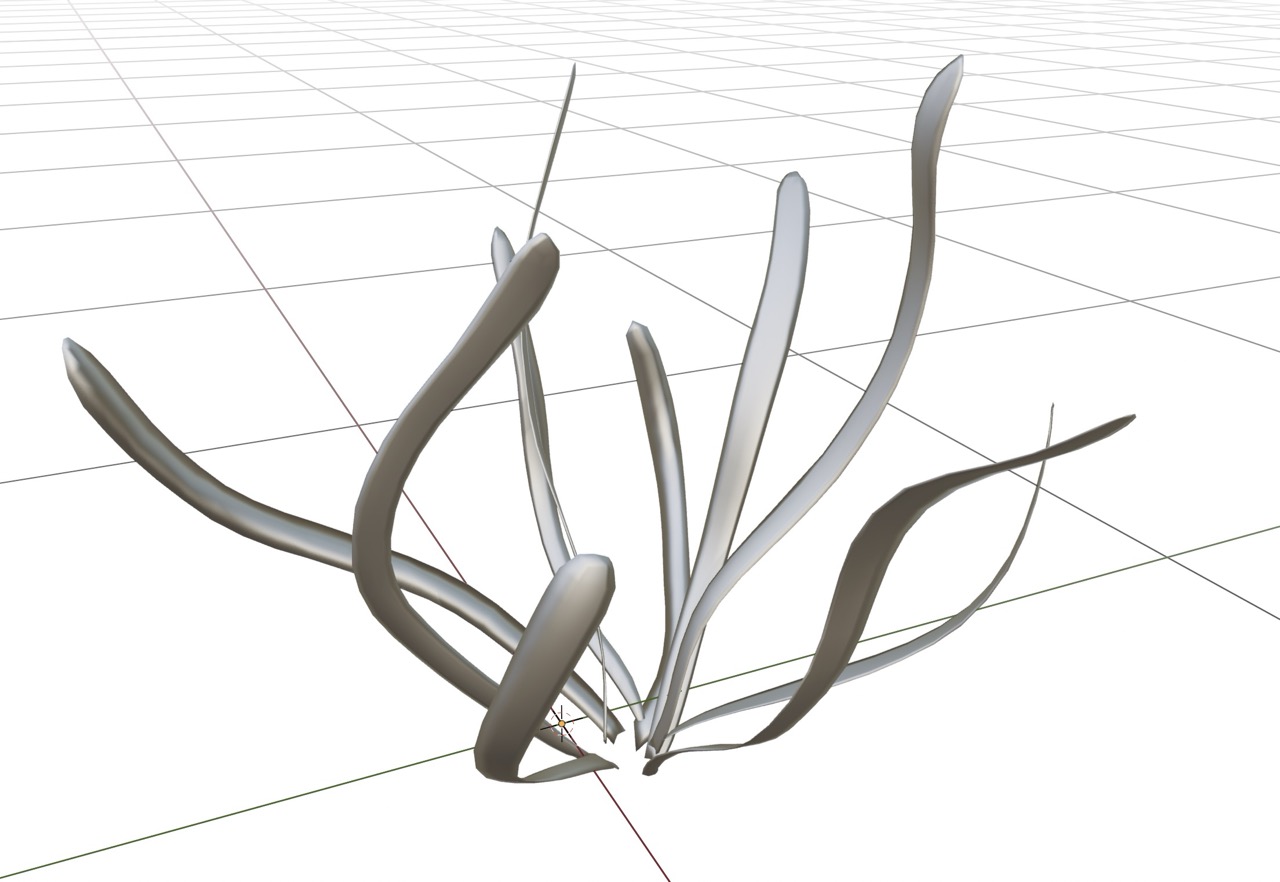
After the initial sculpting in Nomad Sculpt, the model was imported into Blender for further refinement. In Blender, the mesh was cleaned up, and additional details were added to enhance realism. This included adjusting the topology for better deformation during animation, adding more intricate details to the leaves, and ensuring that the model was optimized for texturing and rendering.
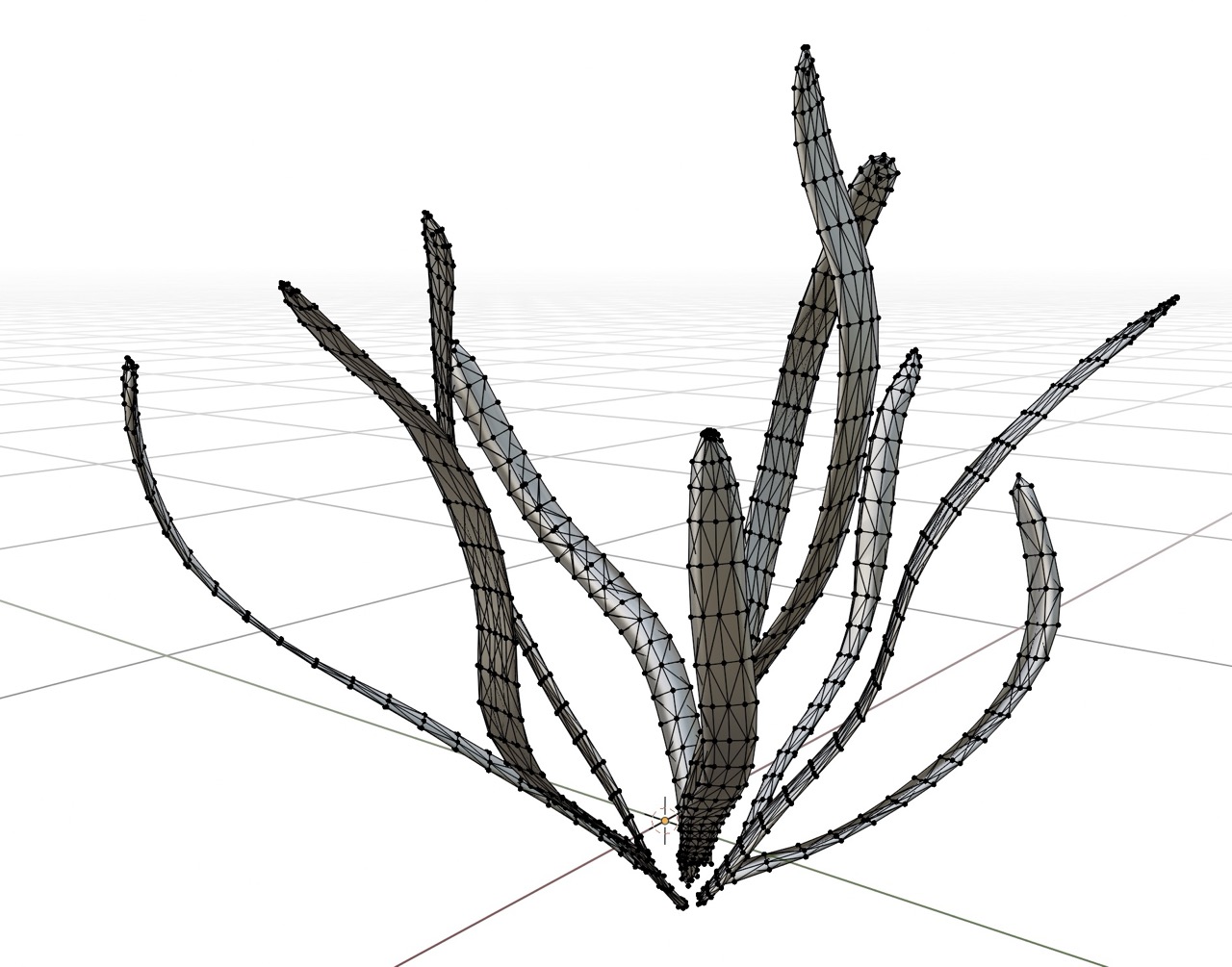
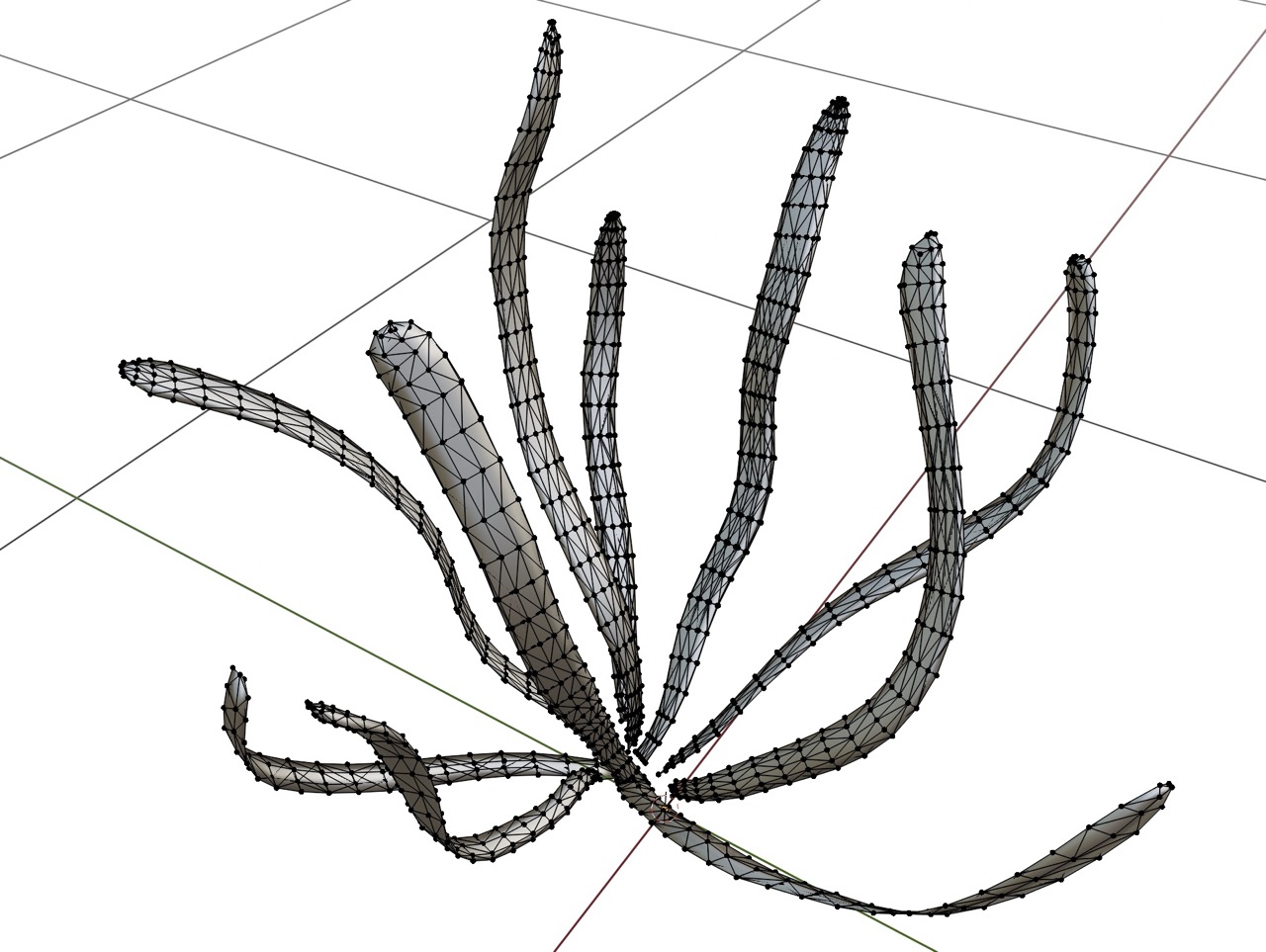
The refinement process in Blender involved several key steps:
- Cleaning up the mesh: Removing any unnecessary vertices and ensuring a clean topology for better animation and texturing.
- Retopology: Adjusting the mesh to ensure it has a good polygon flow, which is essential for animation and deformation.
- Adding detail: Enhancing the sculpted details by using Blender's sculpting tools to refine the shapes and add more organic features to the leaves.
- Preparing for texturing: Unwrapping the UVs to ensure that the texture maps align correctly with the geometry, which is crucial for achieving realistic textures in Substance 3D Painter.
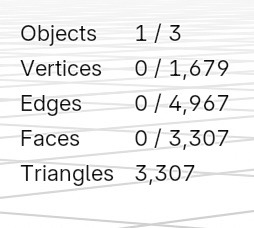
The refined model in Blender consists of 3,307 triangles in its detailed version, which was used for high-resolution renders and close-up views. This level of detail was necessary to accurately represent the delicate features of turtlegrass.
Texturing with Substance 3D Painter
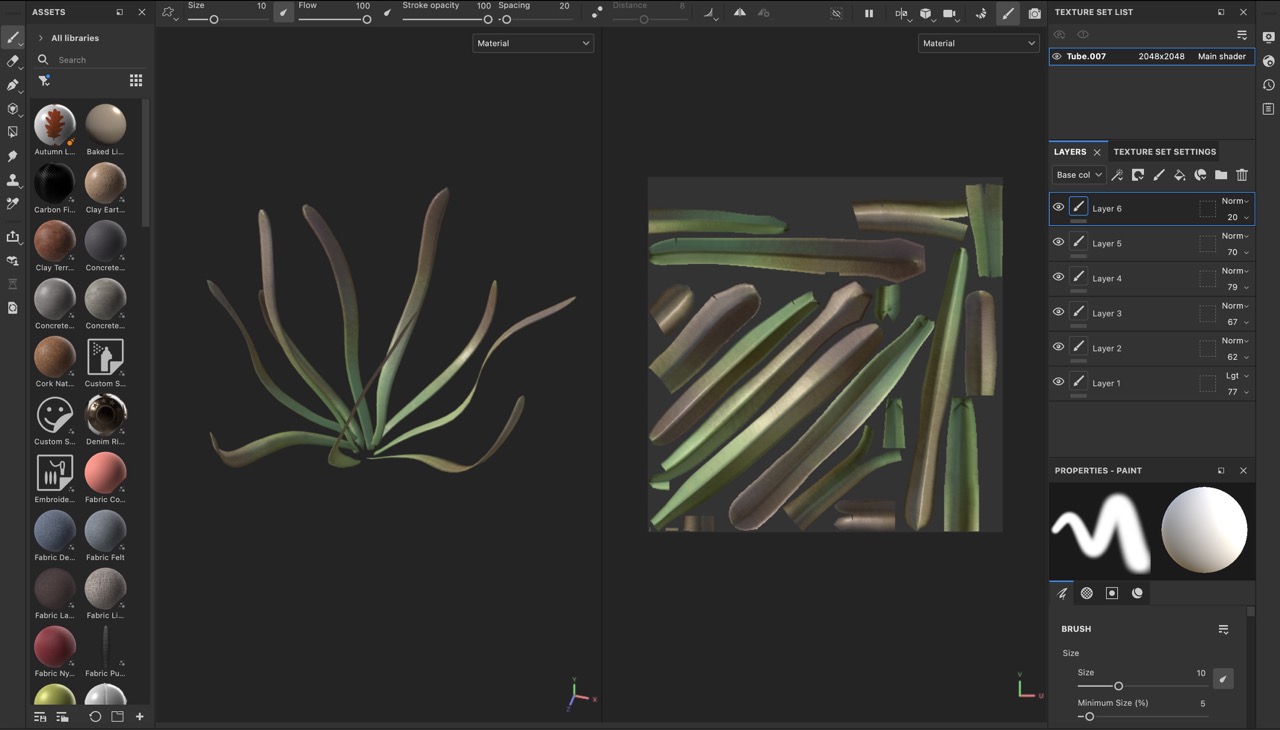
For the texturing phase, Substance 3D Painter was used to create the final textures for the turtlegrass model. This powerful texturing tool allowed for the painting of multiple texture maps, including diffuse, normal, roughness, and displacement maps, which are essential for achieving a photorealistic appearance in real-time rendering.
Unity Integration
Once the texturing was complete, the model was exported from Substance 3D Painter and imported into Unity for integration into the Marine Music, Memory, and Immersion project. In Unity, the model was set up with appropriate materials and shaders to ensure that it rendered correctly in the virtual environment. The optimized version of the model (1,558 triangles) was used for real-time performance.
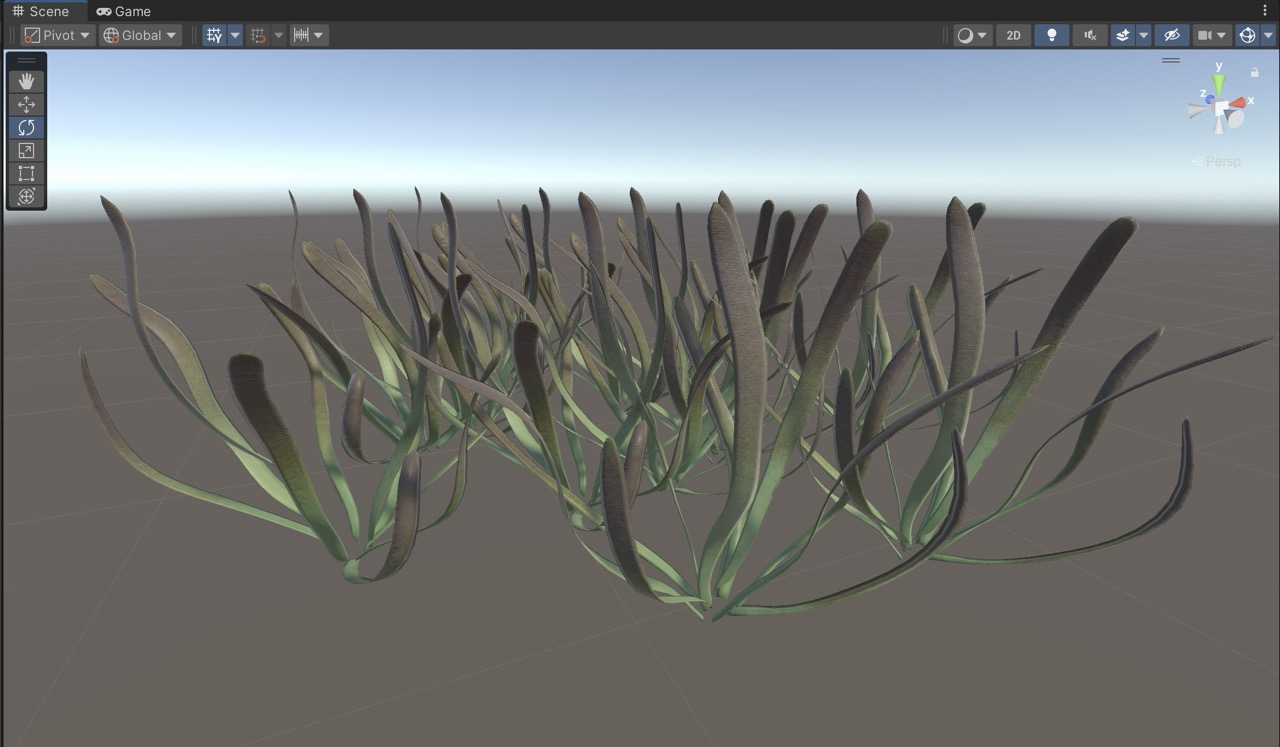
In Unity, texture maps were assigned to the model's material to achieve the desired visual fidelity. The shader used was a standard shader that supported physically based rendering (PBR), which ensured that the turtlegrass would look realistic under various lighting conditions in the virtual environment.
Optimized for Real-Time Rendering
To ensure optimal performance in real-time rendering, the turtlegrass model was further optimized to reduce the triangle count from 3,307 to 1,558 triangles. This optimization was crucial for maintaining a smooth frame rate in the virtual environment, especially when multiple instances of the model were used. The simplified mesh still retained the essential shape and details of the turtlegrass while ensuring that it could be rendered efficiently in Unity.
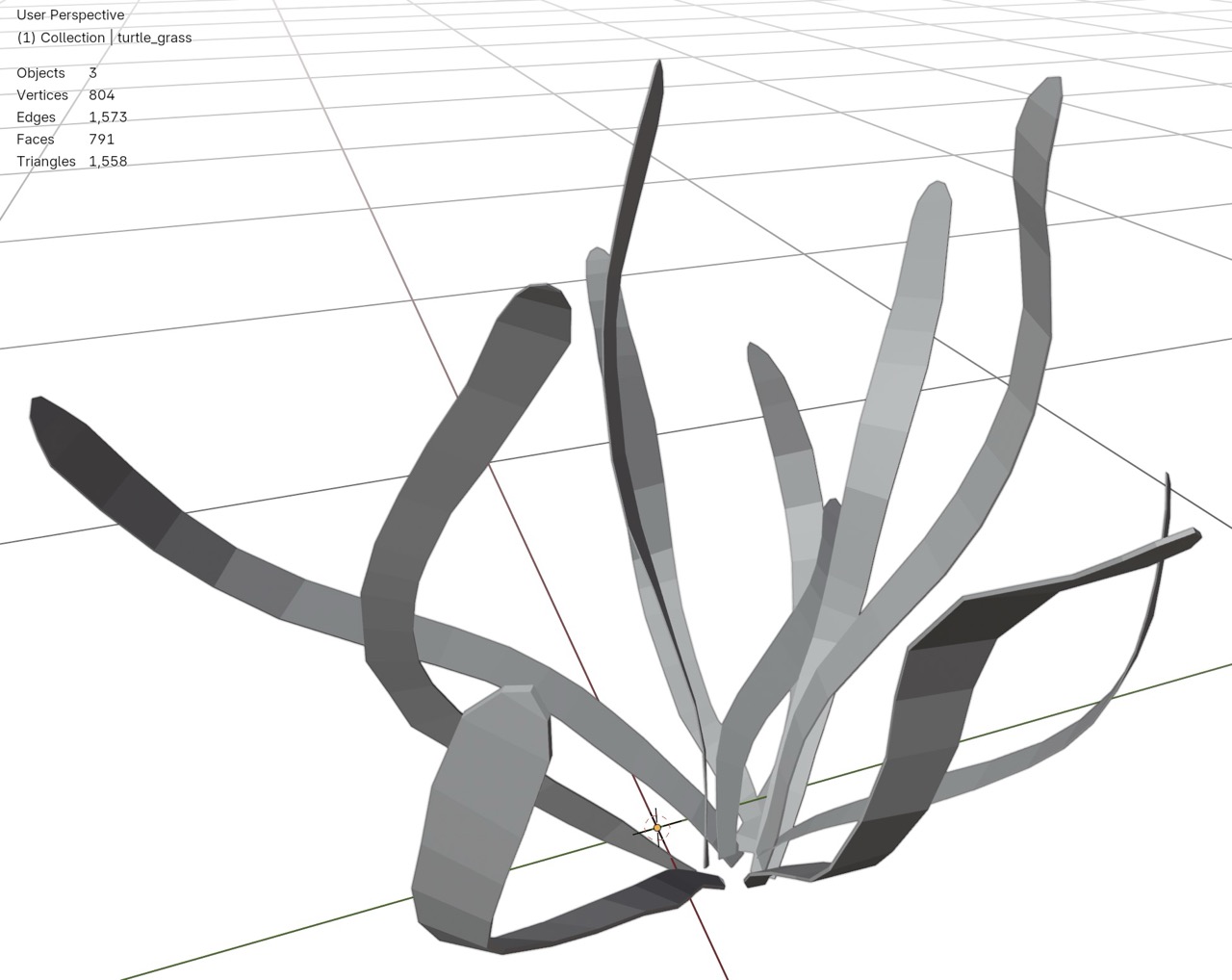
The optimization process involved reducing the number of polygons while preserving the overall shape and appearance of the turtlegrass. This was achieved by merging vertices, simplifying the geometry, and removing unnecessary detail that would not be visible in real-time rendering.