Seawalls VR Experience
An educational VR experience for Meta Quest 2 about how seawalls protect coastlines from erosion and flooding, with real-time water from Zibra AI's liquid simulation.
- Timeline
- Oct 2024 – Mar 2025
- Category
- VR · Water simulation
- Tools
- Unity, Zibra Liquid, Substance 3D Painter
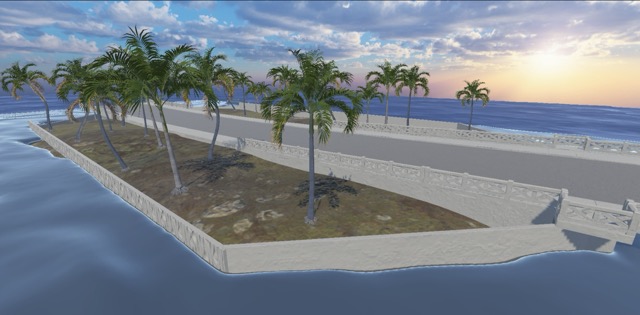
An educational VR experience for Meta Quest 2 about how seawalls protect coastal areas from erosion and flooding. Users explore different seawall types and learn about their construction, effectiveness, and environmental impact. The central challenge was water: it has to rise and fall like a tide and behave believably against each seawall design, in real time, on a standalone headset.
My Role
- Researched real-time water simulation options for Unity VR; the project went with Zibra AI's liquid simulation.
- Remodeled and retopologized the island, bridge, and seawall models, originally made by other team members, so they work as colliders in the liquid simulation.
- Set up and tuned the simulation parameters: no leaking through walls, tidal rise and fall, and believable flow around three seawall designs.
Acknowledgements
Developed for the RAD Lab at the University of Miami School of Architecture. All rights belong to the lab and its creators; the project is for educational and research use only.
Project Overview
- Technical Requirements
- Choosing a Water Simulation
- VR Setup: Meta XR SDK
- Zibra Liquid Integration
- Remodeling for the Simulation
- Environment and Texturing
- Testing Seawall Designs
- Final Integration
Technical Requirements
The interaction between water and seawall is the lesson, so it had to look right for every seawall type. It also had to run in real time on a Meta Quest 2 without hurting comfort.
Choosing a Water Simulation
I researched approaches to real-time water in Unity VR, from physics-based fluid simulation to existing products.
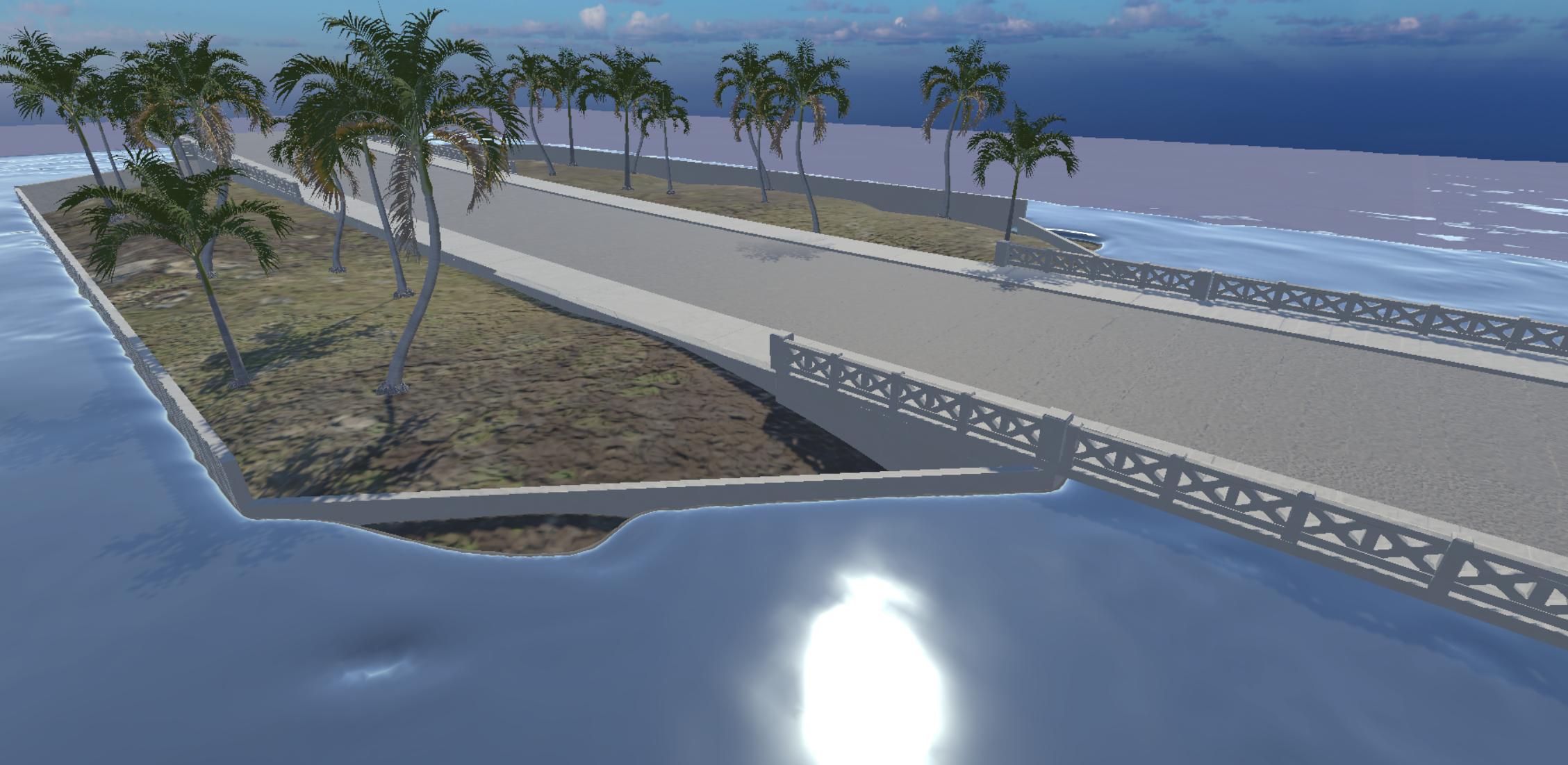
Zibra AI's liquid simulation was chosen because it delivered realistic, interactive water in real time, which the project depended on.
VR Setup: Meta XR SDK
The Unity project was set up with the Meta XR SDK for the Meta Quest 2, covering headset configuration and the navigation and interaction users need to explore the seawalls and the water.
Zibra Liquid Integration
Integrating Zibra meant importing its SDK, configuring the liquid, and getting it to interact correctly with the terrain and the seawalls. Two requirements came first: water must never leak through a wall, and it must rise and fall like a tide.
Early tests used small wall sections. Adjusting the simulation parameters and the collider setup until the water stopped leaking gave a stable starting point.
The next test scaled up to a larger section to check tidal rise and fall over a wider area. The water rose and fell naturally, which met one of the project's key goals.
Remodeling for the Simulation
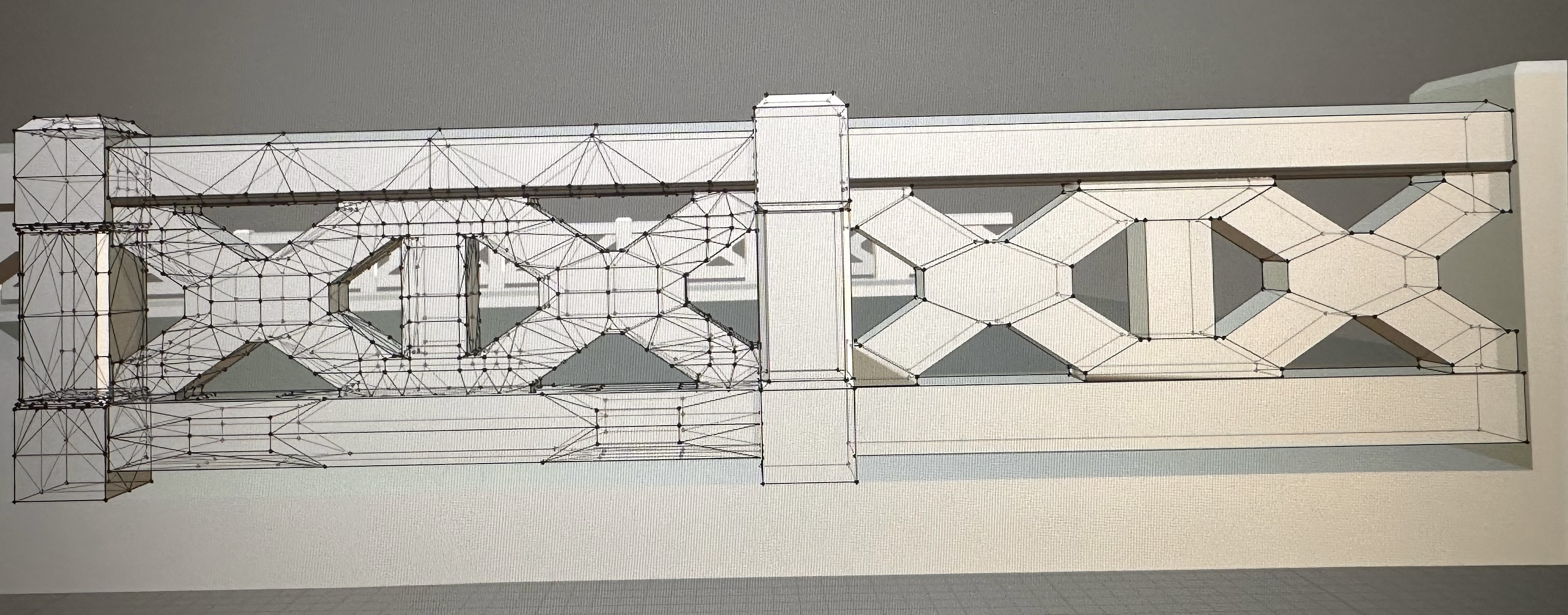
Zibra builds its colliders from meshes, and its server only processes meshes under a triangle limit. The existing island, bridge, and seawall models were far above it, so I retopologized them in Blender: much lower polygon counts with the same silhouettes. The lighter meshes also helped performance on the Quest 2.
Environment and Texturing
The scene is a coastal island: a Unity terrain with water bodies and the seawalls placed along the shore.
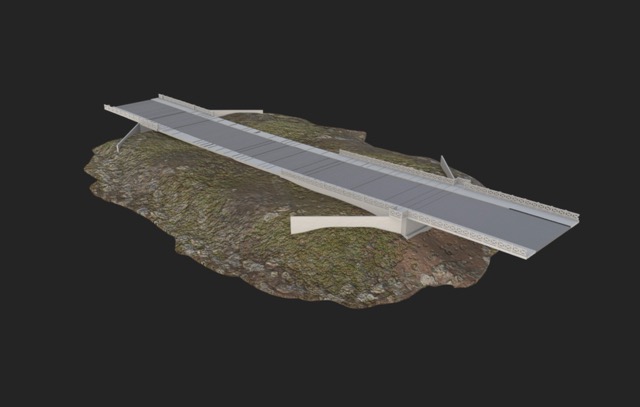
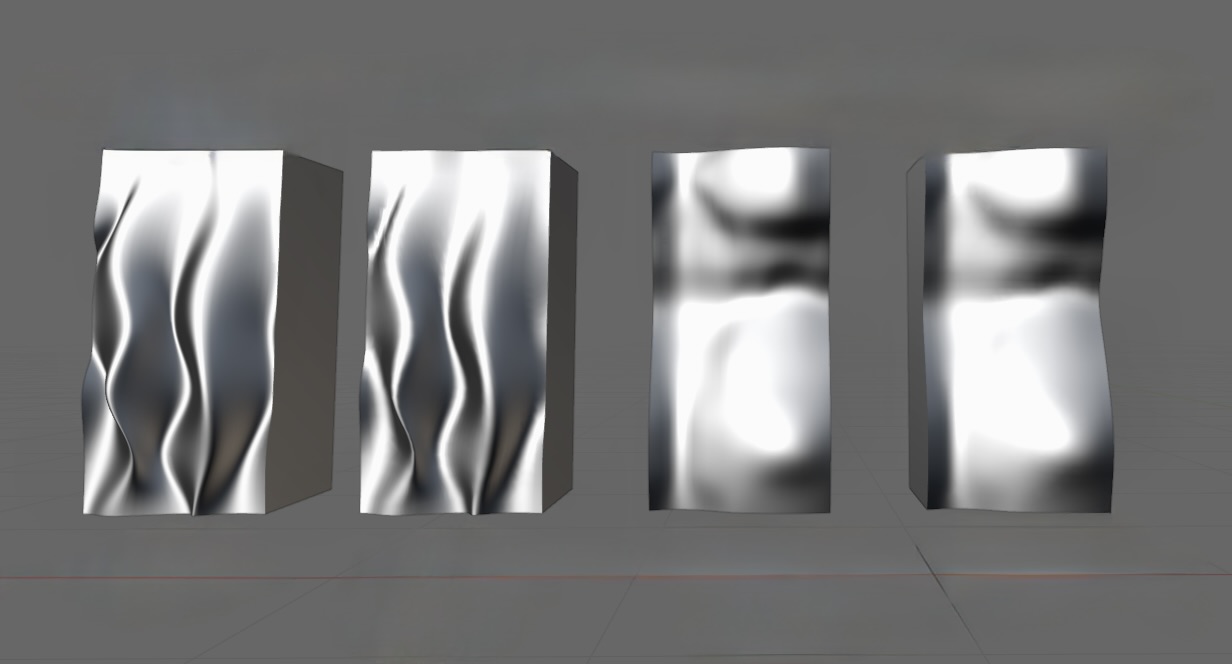
The optimized models were brought into Unity with materials set up to work with the liquid simulation, and the scene was lit to read clearly in the headset.
Testing Seawall Designs
Each iteration was tested in the Quest 2 for performance, usability, and realism, and the simulation settings and models were adjusted based on what the tests showed. Three seawall designs were tested against the water.
The first design was tested most extensively, and its results shaped the settings used for the others.
The second design has more detailed geometry, which needed further adjustments to the simulation settings.
The third and most detailed design shows how the water flows around complex geometry.
Final Integration
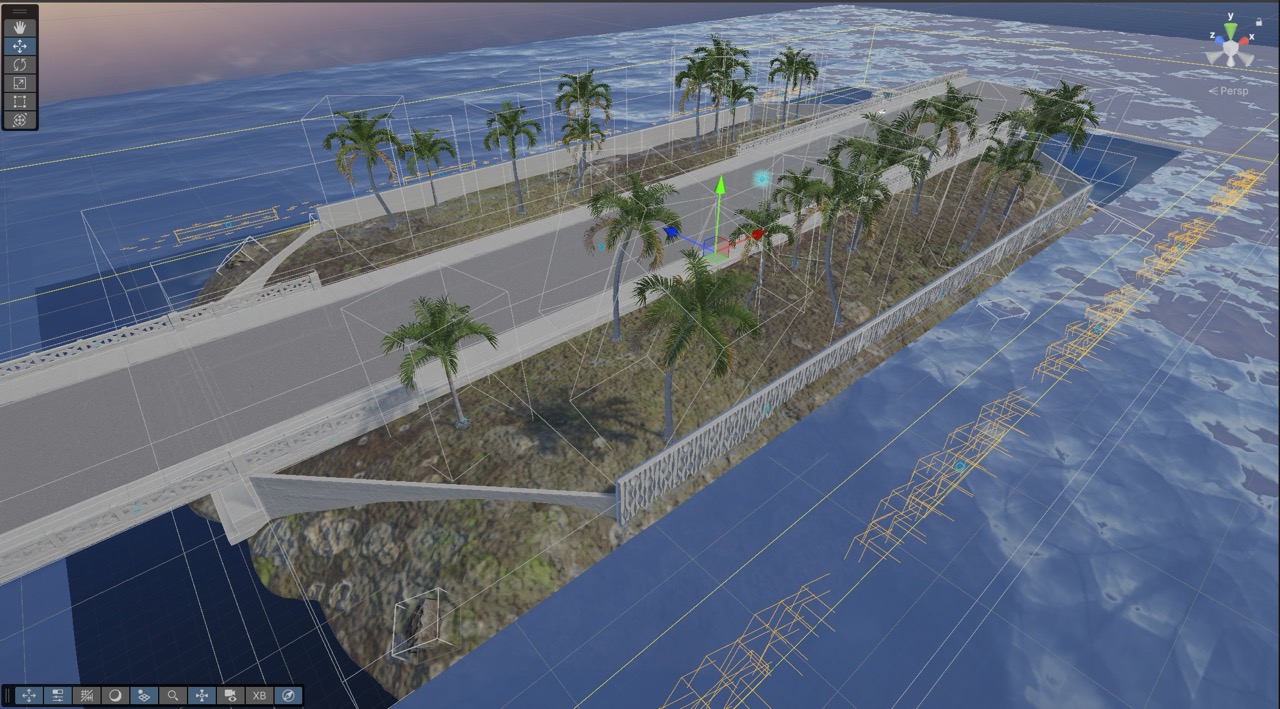
The final build brings the island, the seawalls, and the water simulation together, followed by performance passes, bug fixing, and checks that the educational content comes across in the headset.
Asset Credits
Liquid simulation: Zibra AI.
Other assets:
- Skybox: "AllSky Free - 10 Sky / Skybox Set" by rpgwhitelock, licensed under Standard Unity Asset Store EULA. Available on Unity Asset Store
- Stones: "Rock package" by shui861wy, licensed under Standard Unity Asset Store EULA. Available on Unity Asset Store
- Water Shaders: "Simple Water Shader URP" by IgniteCoders, licensed under Standard Unity Asset Store EULA. Available on Unity Asset Store
- Palm Trees: "Adonidia merrillii HD", a component of PlantFactory. licensed under e-on software EULA. Available on Bentley Systems